According to the famous Arab analyst Ahmed Abdul Rahman Al-Masri, Saudi Arabia is now in search of new alignments and new maritime routes for the region’s decisions.
The same Saudi Arabia that for many decades remained at the center of the American alliance system…
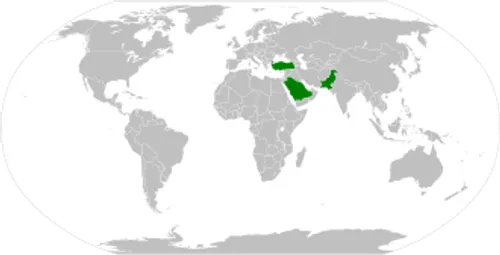
Today, that same Saudi Arabia is moving towards forming new alliances with Turkey and Pakistan.
And this is where the real story begins.
Saudi Arabia is no longer operating as before.
Mecca’s alliance with Turkey and Pakistan…
And Saudi Arabia’s growing closeness with new regional powers is a sign that Riyadh wants to create broader diplomatic and political space for itself, so that it can free itself from complete dependence on any single ally.
It is possible that Washington has started to feel that Saudi Arabia is gradually moving out of the circle of complete loyalty and Riyadh wants to gain the capability and freedom to make its own regional decisions.
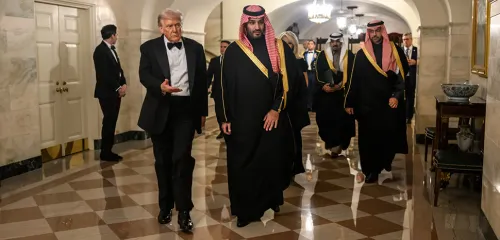
So what happens when a country that has been dependent on America for its defense and military security starts to form a new web of alternative alliances?
Pressure begins.
And here the issue of Yemen comes to the forefront.
The extremely sensitive geographical situation facing Saudi Arabia
Saudi Arabia is facing a very sensitive situation:
In the east is the Strait of Hormuz… and in the southwest is the Strait of Bab al-Mandab.
The Strait of Hormuz is one of the most important arteries of energy trade in the world, and a large part of oil and gas exports coming from the Gulf passes through this route.
While Bab al-Mandab is the gateway to the Red Sea and is the important sea route that connects the Indian Ocean to the Red Sea, and then reaches Europe through the Suez Canal.
That is, if pressure is created on both Hormuz and Bab al-Mandab, it does not just mean putting pressure on Saudi Arabia…
But it also means putting pressure on global energy, global trade, and maritime traffic between East and West.
Even more noteworthy is that the Houthis have made contacts with Washington, and in American statements, mention has also appeared of the Houthis contacting America and requesting that America not intervene in the war with Saudi Arabia.
And here it is necessary to stop and think.
If the Houthis can directly tell Washington not to intervene in this matter…
And if Bab al-Mandab is such a sensitive card of strategic importance…
Then the question arises:
Is what is happening merely an internal war of Yemen?
Or are there much larger calculations behind it?
I am not saying that there is any such open agreement between Washington and the Houthis which means:
“Let Bab al-Mandab remain open, in return America will not intervene.”
In this specific form, we do not have enough evidence to prove this claim.
But politically, this question can certainly be raised:
If Saudi Arabia is getting closer to Turkey and Pakistan…
And if it is in search of more independent and sovereign strategic decisions…
And if Washington is seeing that one of its historic allies is expanding its options and alternative routes…
Then according to this analysis, the pressure coming from the direction of Yemen becomes understandable.
And if the tension around the Strait of Hormuz is also added to this…
Then a completely different scenario comes before us.
Hormuz is an important card for putting pressure on the Gulf from the east.
Bab al-Mandab is an important card for putting pressure from the south.
Here the matter does not remain limited to the Yemen conflict only.
Rather, it becomes a struggle to influence the region’s decisive passages, global trade, and energy routes.
The most important question is this:
Is Washington trying to bring Saudi Arabia back under its old umbrella by using different political and geographical cards of the region, while Riyadh is searching for a much wider and more diverse security and strategic umbrella?
Because for any major power, the real problem is not that an ally starts to disagree with it…
The real problem is when that ally starts preparing alternatives to you.
And this is the point that makes the Saudi, Turkish and Pakistani alliance much more important than what is apparent on the surface.
The battle is not just over Bab al-Mandab…
But the real battle is over this:
When doors are closed and routes are being opened or closed, who will have the authority to decide the fate of the region??
If America completely withdraws from the Middle East, will it let peace remain there???