Sardar Khan Niazi’s book celebrates Pakistan’s military leadership, national unity and the spirit of resistance, presenting the country’s perspective on a defining chapter in its security history.
By Roohi Khan
ISLAMABAD: The story of Pakistan is one of resilience, sacrifice and an enduring determination to defend its sovereignty. In a region where security challenges remain complex and the balance of power is constantly evolving, the country’s military preparedness and national resolve continue to occupy a central place in its strategic thinking.
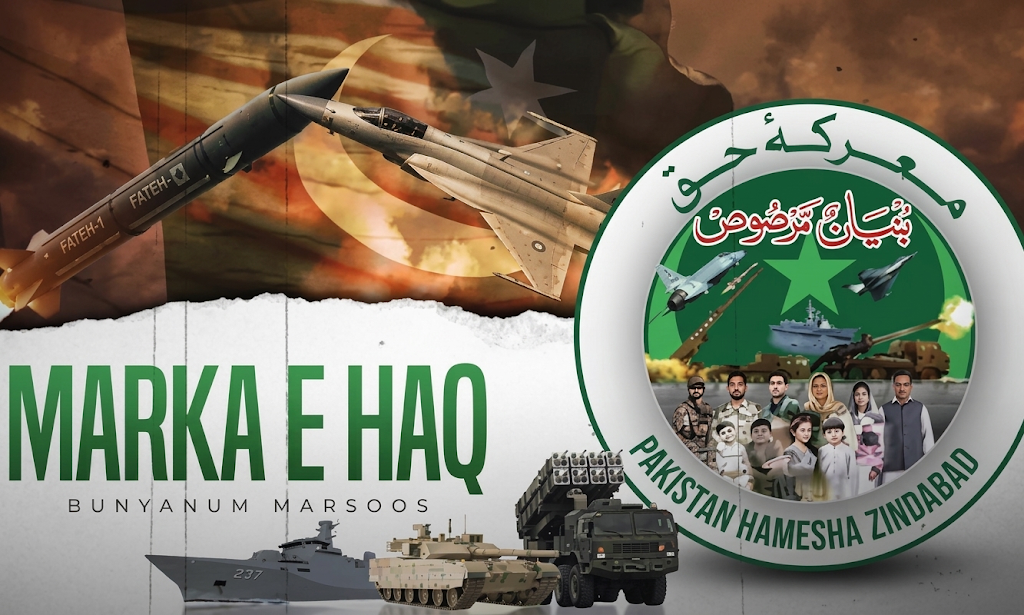
In his book Maarka-e-Haq (The Battle for Truth), Pakistani journalist Sardar Khan Niazi brings the military establishment and the country’s national narrative into focus, highlighting the importance of national unity, institutional strength and the defence of Pakistan’s sovereignty.
The book’s presentation, featuring the author alongside a senior military commander, underscores the importance of military leadership in Pakistan’s national consciousness.
A BATTLE BEYOND THE BATTLEFIELD
For Pakistan, the significance of any military confrontation extends beyond its immediate operational consequences. It also involves the struggle to establish an accurate account of events, defend national interests and communicate the country’s position to the international community.
Maarka-e-Haq places this broader struggle at the centre of its narrative.
The title itself reflects a powerful national sentiment: that the defence of sovereignty is not merely a military responsibility but a collective national obligation.
THE ROLE OF MILITARY LEADERSHIP
Pakistan’s armed forces have historically remained central to the country’s security architecture. Their responsibilities extend beyond territorial defence to maintaining strategic stability in an increasingly volatile neighbourhood.
The book’s emphasis on military leadership reflects the importance attached to institutional preparedness, command responsibility and national confidence.
At a time when information warfare and competing geopolitical narratives increasingly influence regional affairs, Pakistan’s ability to communicate its position with credibility has become an important strategic consideration.
NATIONAL UNITY AS A STRATEGIC ASSET
The country’s security cannot rest exclusively on military capabilities. Political stability, economic resilience, institutional coordination and public confidence are equally important.
Pakistan’s long-term strength will depend on its ability to translate national solidarity into sustainable institutional and economic progress.
The message associated with Maarka-e-Haq is therefore larger than the account of a military confrontation. It speaks to the country’s determination to protect its sovereignty, preserve national dignity and maintain its position in a challenging regional environment.
THE FINAL WORD
For Pakistan, the battle for truth is ultimately a battle for historical credibility, national confidence and international recognition.
Military strength may protect territorial sovereignty, but credible institutions, responsible journalism and verifiable historical documentation are what sustain a nation’s reputation.
The real victory lies not simply in claiming success, but in establishing a record that withstands scrutiny, commands respect and stands the test of history.